Guide 17 of 17 to opening a gym · By discipline
Opening a Pilates or yoga studio: what differs
Opening a Pilates or yoga studio differs from opening a box in four ways. Classes are smaller, and in reformer Pilates the capacity is the number of reformers. Class packs and plans with a few classes a month matter more than unlimited plans. Advance booking decides who trains, so the cancellation window and the waitlist carry more weight. And the room needs quiet, the right temperature and a floor that feels good barefoot. This guide walks through each difference, with the revenue-per-reformer sum and a plan structure to open with.
On this page · 13 sections
- 1.Mat, reformer or yoga: three different businesses
- 2.Capacity is physical
- 3.Packs, credits and few unlimited plans
- 4.Booking decides who trains
- 5.The room
- 6.The timetable
- 7.Teachers and local rules
- 8.Workshops and courses
- 9.The health form
- 10.Equipment
- 11.The mistakes that cost the most
- 12.With Rummo
- 13.Frequently asked
Mat, reformer or yoga: three different businesses
| Mat Pilates | Reformer Pilates | Yoga | |
|---|---|---|---|
| What limits the class | Space per mat and the teacher's attention | The number of reformers | Space per mat and the teacher's attention |
| Equipment investment | Low | High | Low |
| Private sessions | Possible | Possible, including larger apparatus | Possible |
| What matters most in the space | Area and atmosphere | Area per machine and floor | Atmosphere, temperature and noise |
Capacity is physical
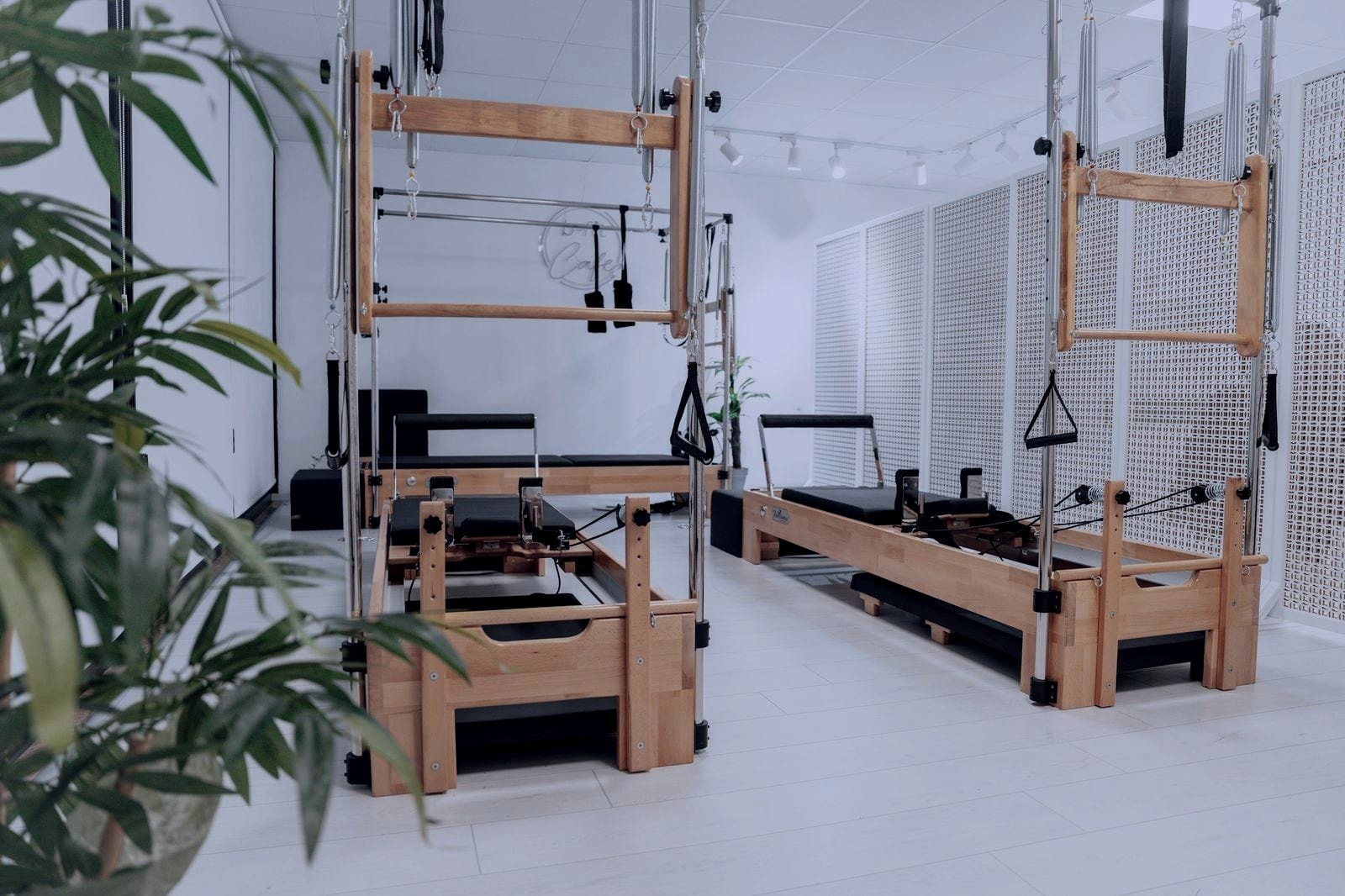
In a box, you choose the class capacity. In a reformer studio, it is bolted to the floor: eight reformers are eight spots, and a ninth does not fit. That changes every sum. The maximum revenue of an hour is known before you open, and each empty spot is a large share of it.
In mat Pilates and yoga, capacity has more slack, but not unlimited slack. Measure the mat, add room for arms and legs to stretch without touching a neighbour, and a walkway for the teacher to move and correct. Multiply by the number of mats you want in the biggest class.
Revenue per reformer
- 1.Class hours per week × number of reformers = spots per week.
- 2.Spots per week × the share you expect to fill = spots sold.
- 3.Spots sold × average revenue per class, before tax = weekly revenue.
- 4.Weekly revenue ÷ number of reformers = what each machine earns per week.
The last number tells you whether one more reformer pays for itself, and how fast. Compare it with the machine's price plus the floor space it takes in your rent.
Packs, credits and few unlimited plans
Someone who trains once or twice a week gains little from an unlimited plan. And in a room of eight reformers, unlimited is risky for the seller. The structure that works best starts from counted classes:
| Plan | Who it is for | The rule to decide |
|---|---|---|
| Drop-in | People trying it or passing through | Price, and whether it counts towards a pack later |
| Pack of 5 or 10 classes | People with irregular schedules | Validity, and what happens to unused classes |
| Monthly, 4 or 8 classes | People coming once or twice a week | Whether unused classes roll over |
| Unlimited | Mat or yoga only, for frequent visitors | How many bookings they can hold at once |
| Private or duet | People who need individual attention | Price per session and private packs |
How to set opening prices and the founding discount has its own guide. Founding member pricing for a new gym
Booking decides who trains
With eight spots per class, the 19:00 class sells out, and booking rules become part of the product. People who cannot get a spot give up, and people who book and do not show take someone else's place. Decide and write down, before opening:
- When booking opens for each class, and how many future bookings each person can hold.
- The window for cancelling without losing the pack credit.
- What happens after a no-show.
- How the waitlist moves when someone cancels, and until when.
Waitlist and late cancellation rules, explained one by one, are in another article. Class waitlist and late cancellation policy guide
The room
- Noise: a yoga class does not sit well next to a busy road or a box. Visit at class times.
- Temperature: heating in winter and ventilation in summer. For heated classes, a dedicated, controllable system.
- Floor: wood, cork or good vinyl, pleasant barefoot and easy to clean.
- Light: natural if possible, and dimmable for the end of class.
- Storage: a place for mats, blocks and bolsters, visible and tidy.
- Changing space, and somewhere to leave shoes and coats outside the room.
What to measure on a viewing and the lease clauses to negotiate are in a guide on choosing a space. Choosing a space for your gym or studio
The timetable
In a studio, it makes sense to organise classes by level and theme: beginners, intermediate, advanced, prenatal Pilates, gentle yoga. Start with a few, at your audience's hours, with one fixed beginners class each week. Newcomers need to know where to start.
Private sessions take the room and the teacher outside group classes. Schedule them in the quieter hours, so they do not take spots from the classes that fill.
An example opening week
| Day | 08:00 | 13:00 | 18:30 | 19:45 |
|---|---|---|---|---|
| Monday | Reformer | Mat | Reformer | Yoga |
| Tuesday | Yoga | Reformer beginners | Reformer | |
| Wednesday | Reformer | Mat | Reformer | Gentle yoga |
| Thursday | Yoga | Reformer | Reformer | |
| Friday | Reformer | Mat | Yoga | |
| Saturday | Reformer at 10:00, yoga at 11:15 |
The way in
Someone who has never done reformer Pilates does not know how to use a reformer, and a group class is not the place to learn. A short beginners course, three or four sessions on set dates, solves that. Sell it as a closed pack, and by the end people know which class to join.
Private sessions
A private session takes up a teacher and sometimes the whole room. It has to carry the price of that hour. Sell privates in packs too, with an expiry, and cancellation rules as strict as group classes, or stricter.
Teachers and local rules
Some countries regulate fitness facilities and the people who teach in them. Whether a Pilates or yoga studio falls under those rules depends on the country and on how the studio is set up. In Portugal, for example, the fitness facility law requires a licensed technical lead. Check with the authority or a lawyer where you are, and do not assume a studio is exempt.
A country-agnostic legal checklist is here. Legal checklist before you open a gym
Workshops and courses
Workshops can grow a studio: inversions, breathwork, a prenatal series, a weekend intensive. They bring in people who are not members yet, and they give members something to look forward to. Price them as events, with their own capacity and sign-up, separate from the class timetable.
The health form
Some people come to Pilates and yoga because of an injury, a pregnancy or a recovery. The intake form has to ask about it, and the teacher has to read it before the first class. That is health data. In the EU, the GDPR treats it as a special category, and only people who need it should see it.
Equipment
For mat Pilates and yoga, the investment is small: mats and props, one set per spot. For reformer Pilates, the reformers are the biggest start-up cost, and the tower, chair and barrel can wait for private sessions.
The list by modality, with what to buy first, has its own guide. Equipment list to open a box or studio
The mistakes that cost the most
- Selling unlimited plans in a reformer studio. The busiest spots end up with the same people.
- Packs with no expiry. They stay on the books forever.
- No cancellation rule. With eight spots, every no-show is a spot someone else wanted.
- A beautiful room where you can hear the street.
- A health form nobody reads before class.
In a studio, capacity is bolted to the floor. Booking rules are worth as much as the class.
With Rummo
On paid plans, Rummo has class packs and memberships with credits and expiry, and booking rules by class type and by plan. Booking opens and closes when you decide, with a cancellation window and a limit on future bookings. On every plan, the waitlist moves on its own when someone cancels.
Workshops and courses get their own page, with sign-up and capacity, and paid tickets on paid plans. The digital waiver, with its health questions, is signed on the phone before the first class.
How Rummo works for a Pilates studio is on the business type page. Rummo for Pilates studios
Frequently asked
- How many people should a reformer Pilates class have?
- As many as there are reformers, and never more. Capacity is physical. The real question is how many machines fit with walking space, and how many one teacher can follow.
- Class packs or memberships for a Pilates studio?
- Both. Packs with an expiry for irregular schedules, and monthly plans of four or eight classes for regular members. Unlimited plans make more sense for mat and yoga than for reformers.
- Do Pilates and yoga studios need licensed instructors?
- It depends on the country and on how the studio is set up. Some countries regulate fitness facilities and coaches. Check with your authority or a lawyer before opening.
- What makes a good yoga room?
- Quiet, with controllable temperature, a floor that is pleasant barefoot and dimmable light. Visit at class times to hear the street and the neighbours.
- How do I reduce no-shows in an eight-spot class?
- With a written cancellation window, the same consequence for everyone, and a waitlist that moves on its own. With few spots, every no-show weighs more.
- Can I combine Pilates and yoga in one studio?
- Yes, and some studios do. Work out each one separately: capacity, price per class and equipment all differ.
- Can I run private sessions in the same room as classes?
- Yes, in the hours the room is empty. Book them outside the classes that fill, so they do not take spots from group members.
Sources
- Regulation (EU) 2016/679, General Data Protection Regulation · EUR-Lex, 2016
Rummo team
Written by the people who build Rummo, management software for gyms, boxes and studios: classes, bookings, members and payments.
Reviewed
Opening soon? Set up your week before day one.
Create your space, classes and plans, and members book from their phones. The 9 first-week steps take about 31 minutes.
Lite is free up to 10 active members, with no card and no time limit. Pro comes with a 14-day trial, also with no card.